Every bottle has a story.
Every jar begins with an ingredient.
And behind every ingredient is someone who grows it.
For Sikkim Supreme, farmers are not an afterthought added to a brand story. They are part of the reason the Government Fruit Preservation Factory was established in the first place.
When the factory began in 1956, its purpose was closely connected to Sikkim’s agricultural harvest — particularly its abundant oranges. The challenge was not simply how to preserve fruit. It was how to ensure that the value of what Sikkim’s farmers grew did not disappear because of distance, time and spoilage.
Seventy years later, that founding connection between farmer, harvest and preservation remains at the heart of Sikkim Supreme.
Key Takeaways
- Farmers are central to Sikkim Supreme’s founding story.
- The Government Fruit Preservation Factory was established in 1956 to help preserve Sikkim’s agricultural harvest.
- Its original focus was Sikkim’s abundant orange harvest.
- The factory’s historical role included creating a more dependable market for local produce.
- Sikkim Supreme’s wider product range reflects the diversity of Sikkim’s agricultural landscape.
It Started With a Harvest
Before there were dozens of products, there was a harvest.
In the 1950s, Sikkim’s orchards were producing oranges of exceptional quality. But the state’s mountainous geography made transporting fresh fruit to distant markets difficult.
Fresh produce has a limited window.
If it could not reach a buyer in time, it could spoil — and once the fruit spoiled, its value was gone.
The Government Fruit Preservation Factory was established in Singtam, East Sikkim, in 1956 to address this challenge. Its founding purpose was to preserve Sikkim’s harvest before it was lost to distance and time.
That makes the farmer part of the story from the very beginning.
No harvest, no factory.
No farmers, no harvest.
More Than a Place to Process Fruit
The role of the factory went beyond simply turning fresh produce into preserved food.
Historically, GFPF also helped create a more dependable route from farmer to market. The brand context documents examples of the factory purchasing produce at agreed rates, giving growers greater certainty that their harvest had somewhere to go.
This mattered because a farmer’s bargaining position changes when produce is perishable.
A crop that has to be sold immediately leaves little room to negotiate.
Preservation creates time.
A dependable buyer creates another layer of security.
And processing can turn a seasonal harvest into something that can travel and remain available for longer.
That was part of the larger purpose behind GFPF.
The idea was simple: preserve the harvest, protect its value, and help it travel beyond the mountains.
The Orange That Started It All
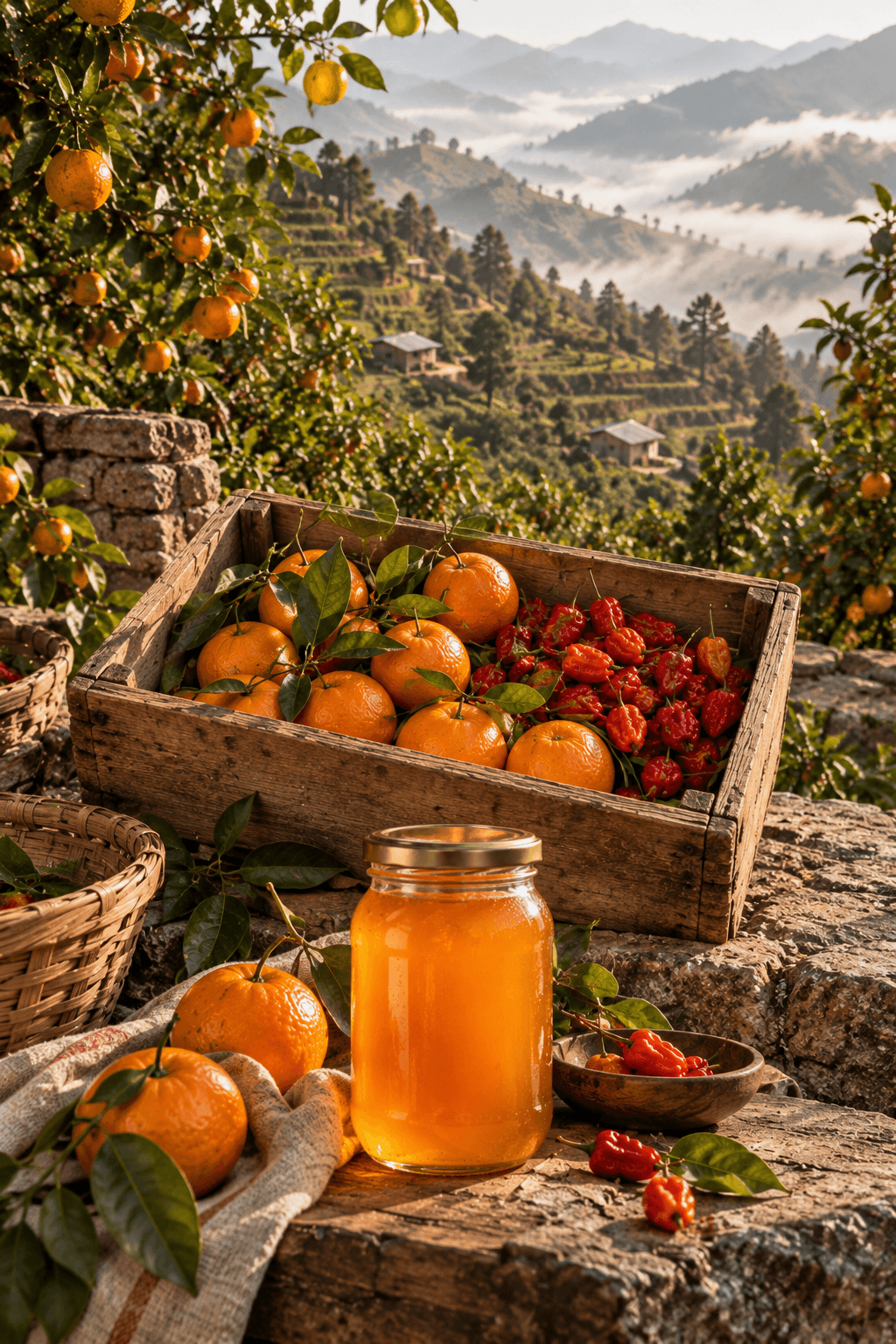
The orange holds a special place in Sikkim Supreme’s history.
The Government Fruit Preservation Factory was established to preserve Sikkim’s orange harvest, and its first product was orange squash.
That first bottle represented a connection between the orchard and the world beyond Sikkim.
An orange growing on a Himalayan hillside had a short window in which it could be sold fresh.
Orange squash gave that harvest another life.
The journey became:
Orchard → Harvest → Preservation → Bottle → Consumer
It was a simple idea with a lasting impact.
And it became the foundation of Sikkim Supreme.
From One Crop to Many Himalayan Flavours
Sikkim’s agriculture is not defined by one ingredient.
As the years passed, Sikkim Supreme’s range expanded beyond its original orange focus.
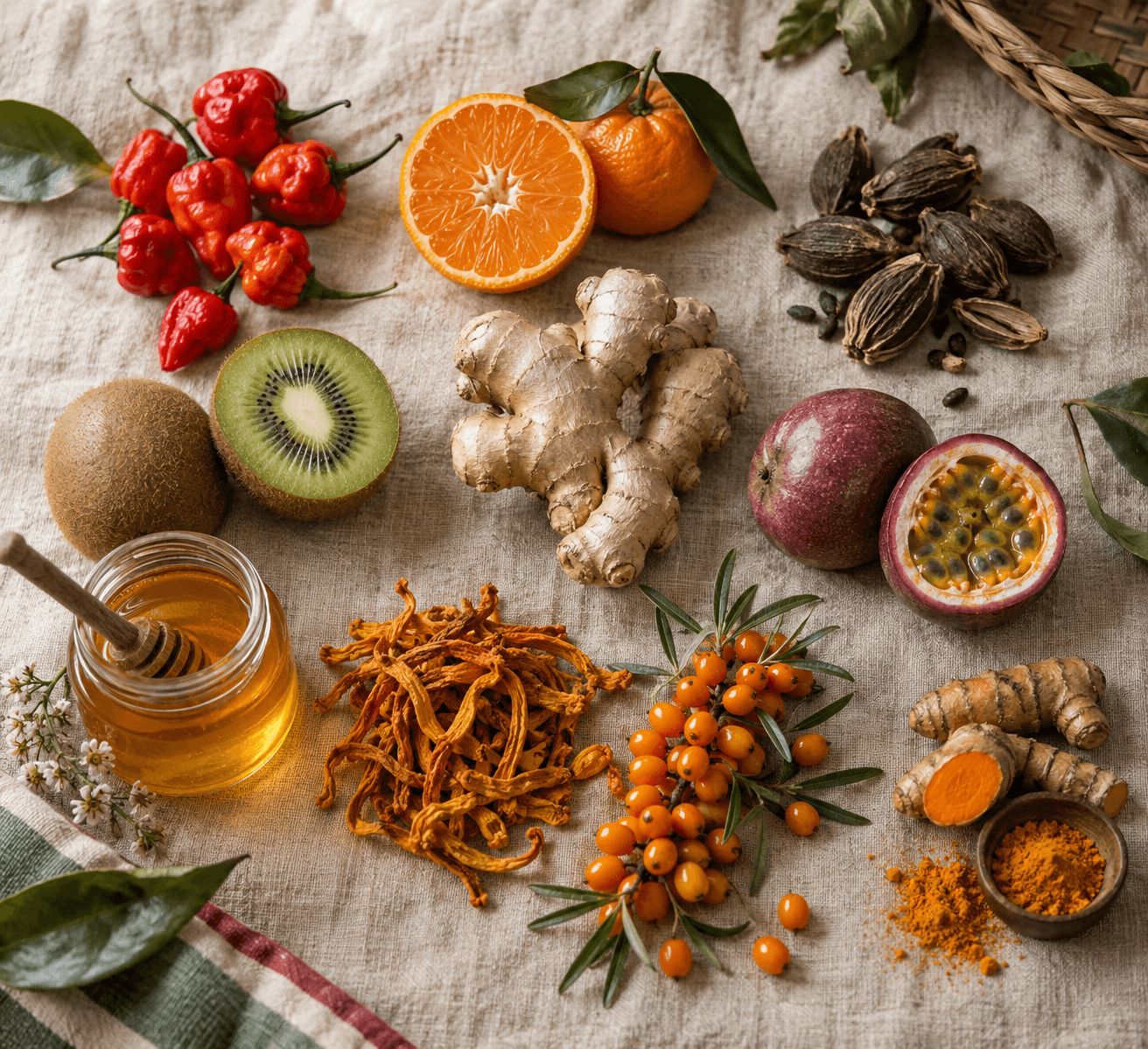
Today, the brand’s portfolio includes products made around ingredients such as passion fruit, pineapple, kiwi, mango, plum, sea buckthorn, lemon and rhododendron, alongside orange. Its jams and spreads extend that fruit story further.
The same principle that began with the orange could be applied to other crops:
preserve what Sikkim grows and make its flavour travel.
This is why the modern Sikkim Supreme pantry feels so diverse.
The products may differ.
The underlying connection does not.
Farmers and Sikkim’s Organic Journey
The story of Sikkim’s farmers is also part of a much larger agricultural transformation.
Sikkim began phasing out chemical fertilisers and pesticides in 2003 and completed its transition to a fully organic state in 2016. The state’s organic policy was subsequently recognised with the Future Policy Gold Award in 2018, awarded through the FAO, World Future Council and IFOAM.
The transition was significant in scale, with the state’s policy affecting more than 66,000 growers, according to the supplied brand context.
For a brand rooted in Himalayan agriculture, this history matters.
The word “organic” is not simply a product descriptor.
It is part of the story of how Sikkim’s agricultural landscape changed.
And behind that transition were farmers adapting the way they cultivated the land.
When GI Protection Helps Protect a Place
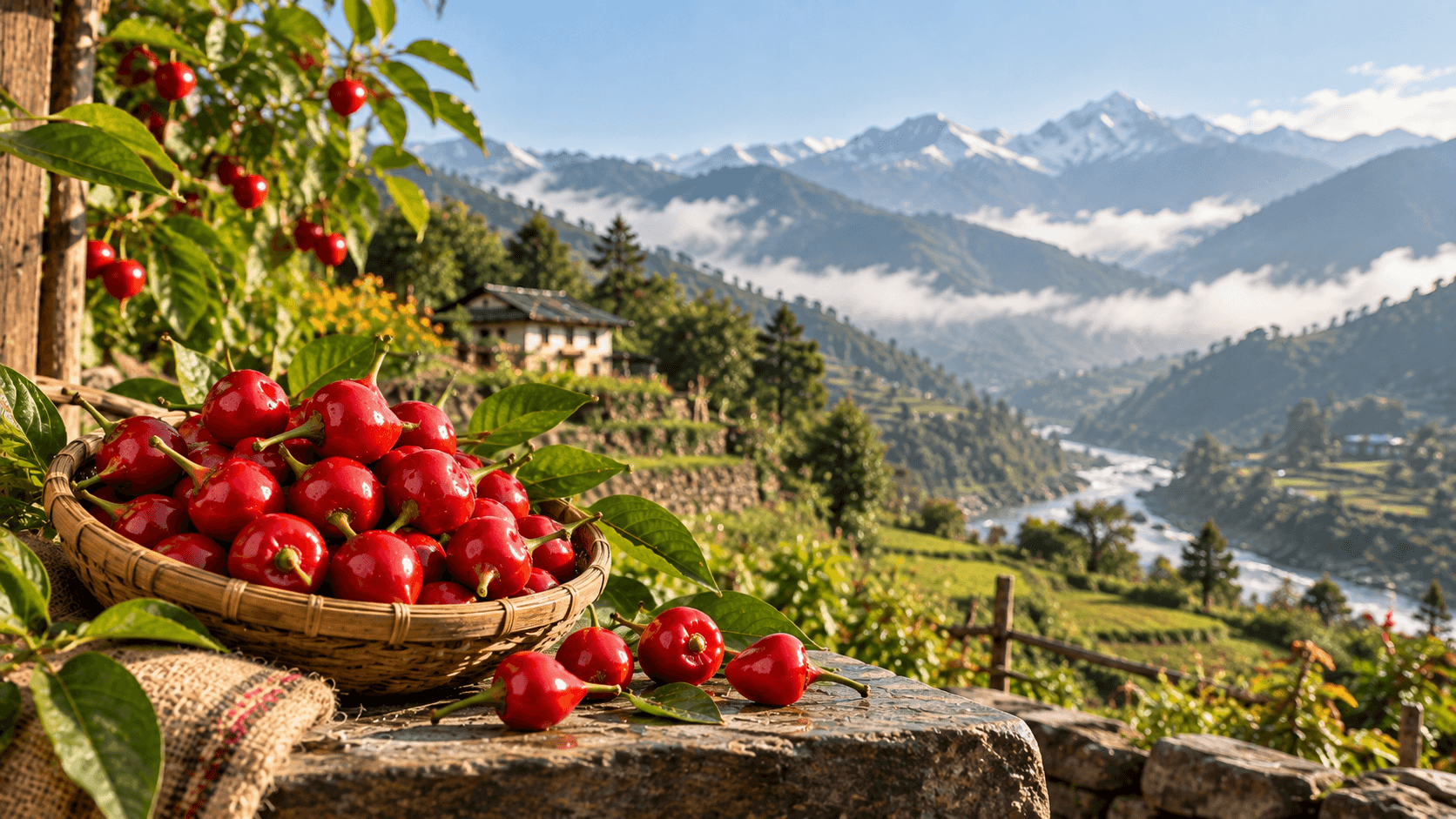
Farmers also sit behind the story of Dalle Khursani.
The distinctive Sikkimese chilli received a Geographical Indication (GI) tag in 2020, protecting its regional identity and preventing producers outside the recognised region from using the same name for their chillies.
That matters because a GI is more than a label.
It connects a product to a particular geographical origin.
For Dalle Khursani, that origin is part of what makes the ingredient valuable and distinctive.
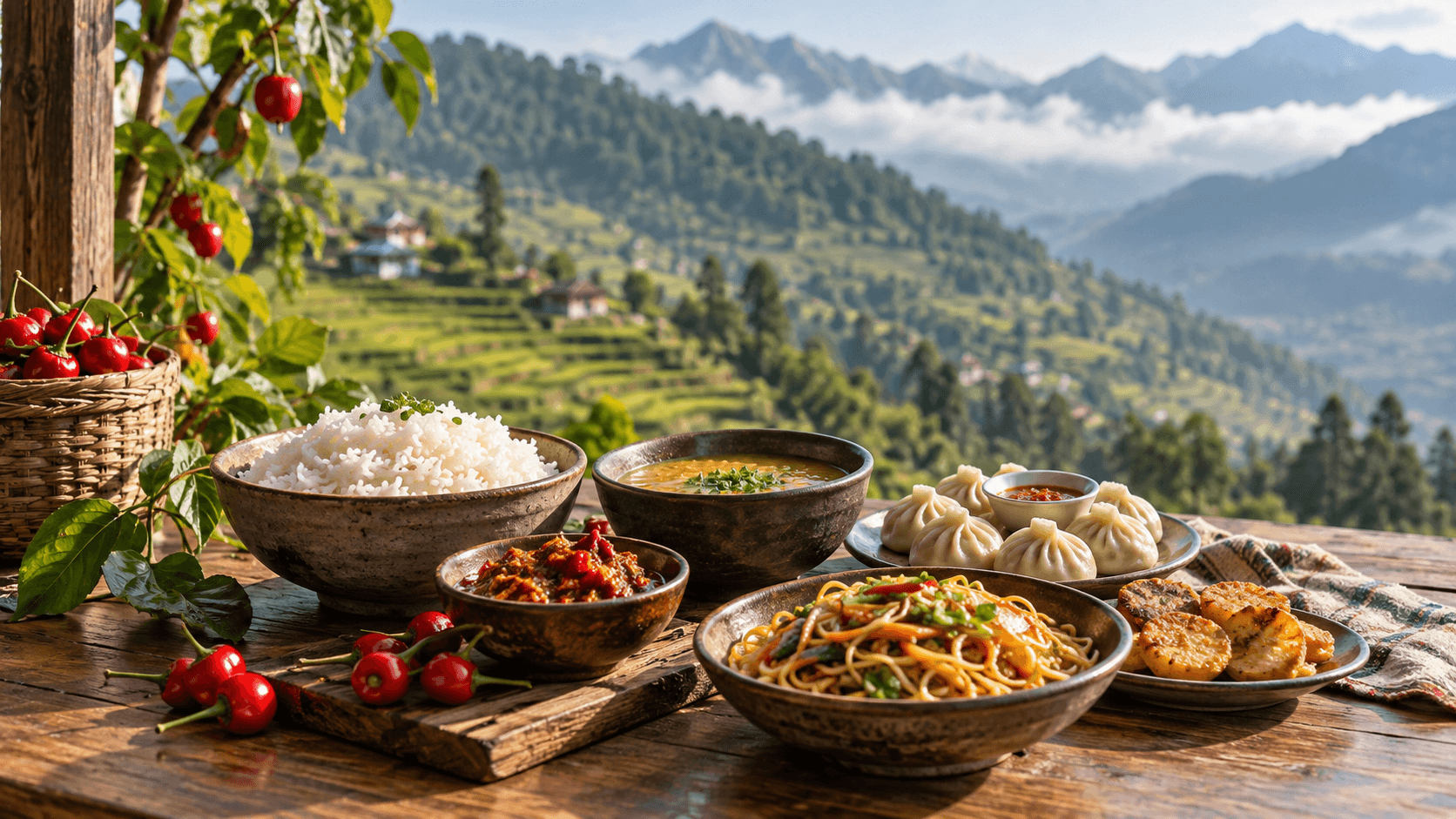
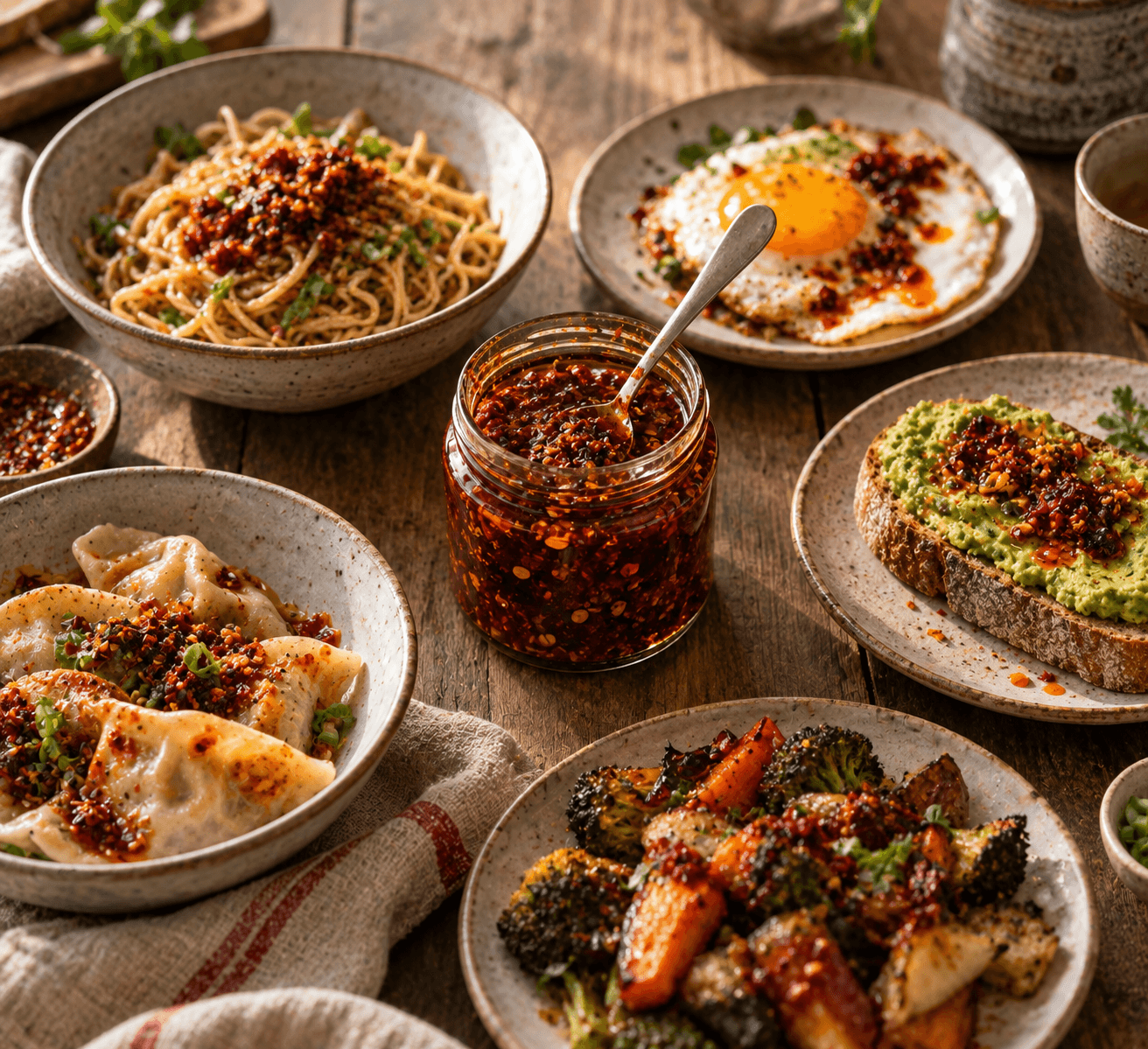
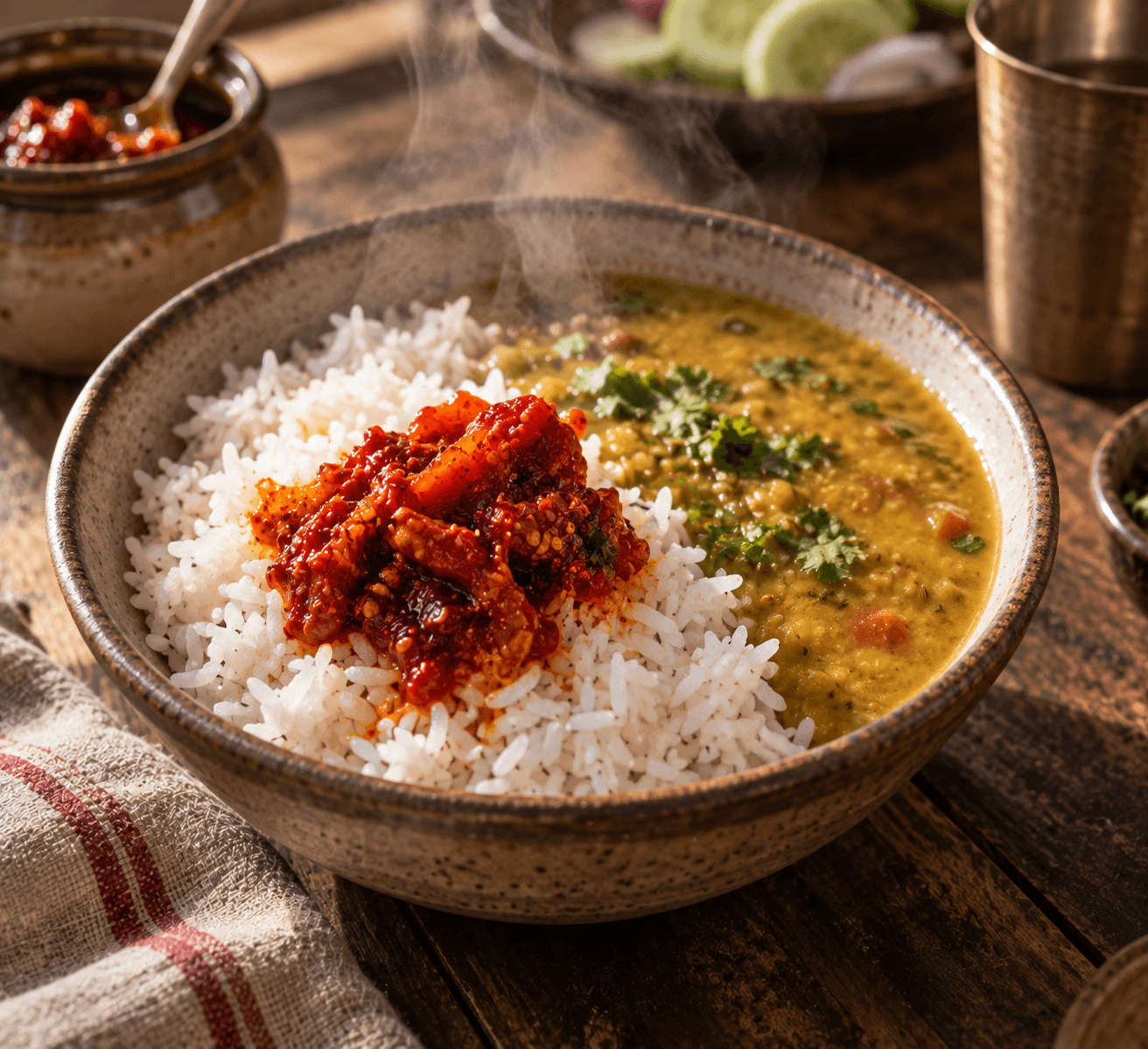
Sikkim Supreme’s Dalle Khursani range — including pickles, Chilli Crisp, sauces, paste and other preparations — brings that regional ingredient into the wider pantry.
From Farmers to Food on Your Table
There is a natural distance between a farm in Sikkim and a kitchen somewhere else in India.
Sikkim Supreme exists, in part, to bridge that distance.
A farmer grows the crop.
The harvest is collected.
The produce enters a preservation and processing journey.
And eventually, the ingredient reaches a table far beyond the hills where it began.
That journey is easy to overlook when you see a finished jar on a shelf.
But it is worth remembering.
The flavour starts long before the factory.
It starts in the soil, the orchard, the field and the hands that care for the crop.
Why Farmers Are Part of the Sikkim Supreme Story
There are many ways to describe a food brand.
You can talk about recipes.
You can talk about flavours.
You can talk about packaging or products.
But Sikkim Supreme has another story to tell.
It is a story that began with the relationship between agriculture and preservation.
The Government Fruit Preservation Factory was established in 1956 because Sikkim had something worth preserving: its harvest.
That purpose connected the institution to the farmers who produced that harvest from the very beginning.
Today, that connection continues through a broader range of Himalayan ingredients and products.
The pantry has grown.
The purpose remains.
Behind every flavour is a farmer. Behind every harvest is a place. And behind every jar is a journey from one to the other.
A Story Still Being Written
There is much more to discover.
Every orchard has its own story.
Every growing season brings its own challenges.
Every crop has its own character.
And every farming family has a different relationship with the land.
Sikkim Supreme’s Farmers & Sourcing section is designed to tell those stories through real people, real orchards and current sourcing details as they become available.
That is important because the best farmer stories should not be generic.
They should have names.
They should have places.
They should have real experiences.
And they should be told with permission and accuracy.
The next chapter of this story belongs to those voices.
From Their Harvest to Your Table
The next time you open a bottle of squash, spread some jam on toast or add Dalle Khursani to your meal, remember where the story begins.
Not on a supermarket shelf.
Not in a factory.
Not even in a jar.
It begins with a harvest.
And behind that harvest are the farmers of Sikkim.
For seventy years, Sikkim Supreme has carried that connection forward — from the orange orchards of 1956 to today’s wider pantry of Himalayan flavours.
From their fields to your table.
From Sikkim to the world.
Frequently Asked Questions
Who are the farmers behind Sikkim Supreme?
Sikkim Supreme’s products are rooted in the agricultural produce of Sikkim and the farmers who grow it. The brand’s founding story began with the need to preserve Sikkim’s orange harvest and create a more dependable route for agricultural produce to reach markets.
How does Sikkim Supreme support farmers?
The historical role of the Government Fruit Preservation Factory included creating a dependable market for local produce and purchasing crops at agreed rates. The brand context also identifies market access as an important part of the factory’s role in supporting local tribal and small farmers.
What was the first crop associated with Sikkim Supreme?
Oranges were at the heart of the brand’s founding. The Government Fruit Preservation Factory was established in 1956 to preserve Sikkim’s orange harvest, and its first product was orange squash.
Is Sikkim’s agriculture organic?
Sikkim completed its transition to a fully organic state in 2016 after beginning to phase out chemical fertilisers and pesticides in 2003. Its organic policy received the Future Policy Gold Award in 2018.
Why is Dalle Khursani important to Sikkim’s farmers?
Dalle Khursani is a chilli strongly associated with Sikkim and received a GI tag in 2020. GI protection connects the chilli’s market identity to its geographical origin and helps protect the distinctiveness associated with the region.
Can I learn about individual Sikkim Supreme farmers?
Yes, the website’s planned Farmers & Sourcing section includes farmer profiles. Current names, villages, orchards and other personal details should be confirmed and shared with permission before individual profiles are published.